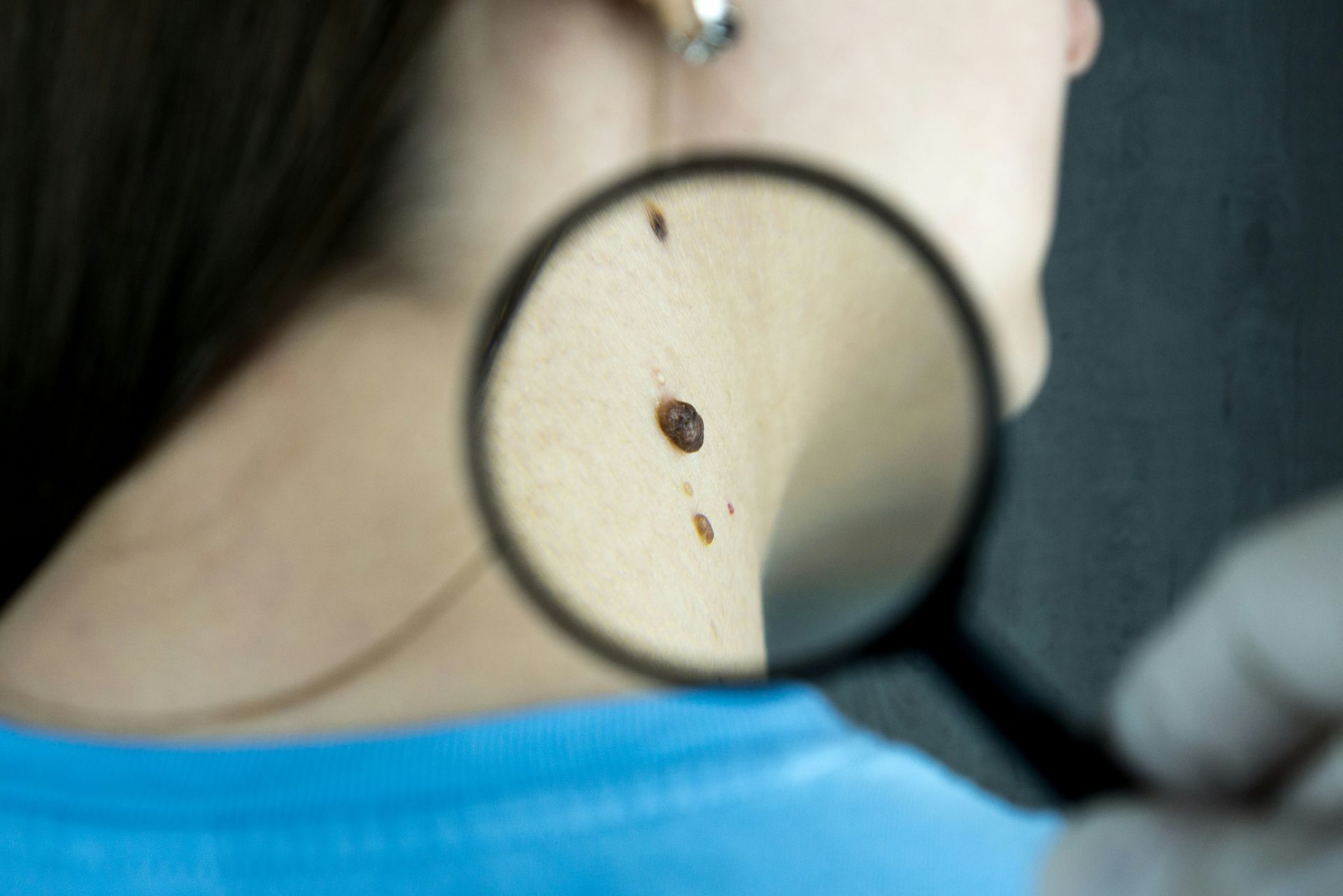
What does Skin Cancer Look Like? Signs & Symptoms
Early detection of skin cancer drastically improves outcomes. This guide describes the appearance of different skin cancers, with pictures from public health image libraries.
The 3D structure of a melanoma cell.
General Warning Signs
The most important step is to watch for anything on your skin that’s new, unusual, or changing. This can be:
- A new mole, spot, or sore.
- An existing mole or spot that changes in size, shape, or color.
- A sore that doesn’t heal or keeps coming back.
- A spot with itching, tenderness, or bleeding.
- A lesion that looks different from the other moles and spots on your skin.
If you aren’t sure, get checked by a dermatologist (skin doctor) or talk to your primary care doctor. Even subtle changes are worth checking, since skin cancers don’t always hurt, itch, or bleed.
What Does Melanoma Look Like?
Melanoma, the deadliest form of skin cancer, can spread rapidly if not caught early. To identify a potential melanoma, use the ABCDE rule.
- A — Asymmetry: One half of the mole doesn’t match the other.
- B — Border: Borders are irregular, ragged, or uneven.
- C — Color: The mole is not evenly colored and may include different shades of black, brown, red, and/or white spots.
- D — Diameter: The mole is larger than 6mm or 1/4th of an inch.
- E — Evolving: The mole is changing in size, shape, or color.
Remember: a mole or spot doesn’t have to meet all 5 criteria to be melanoma. If a spot meets just 1 or 2 of these criteria, you should get it checked. It is common for melanomas to not meet all 5 of the ABCDE rules.
Below are example images of melanoma.
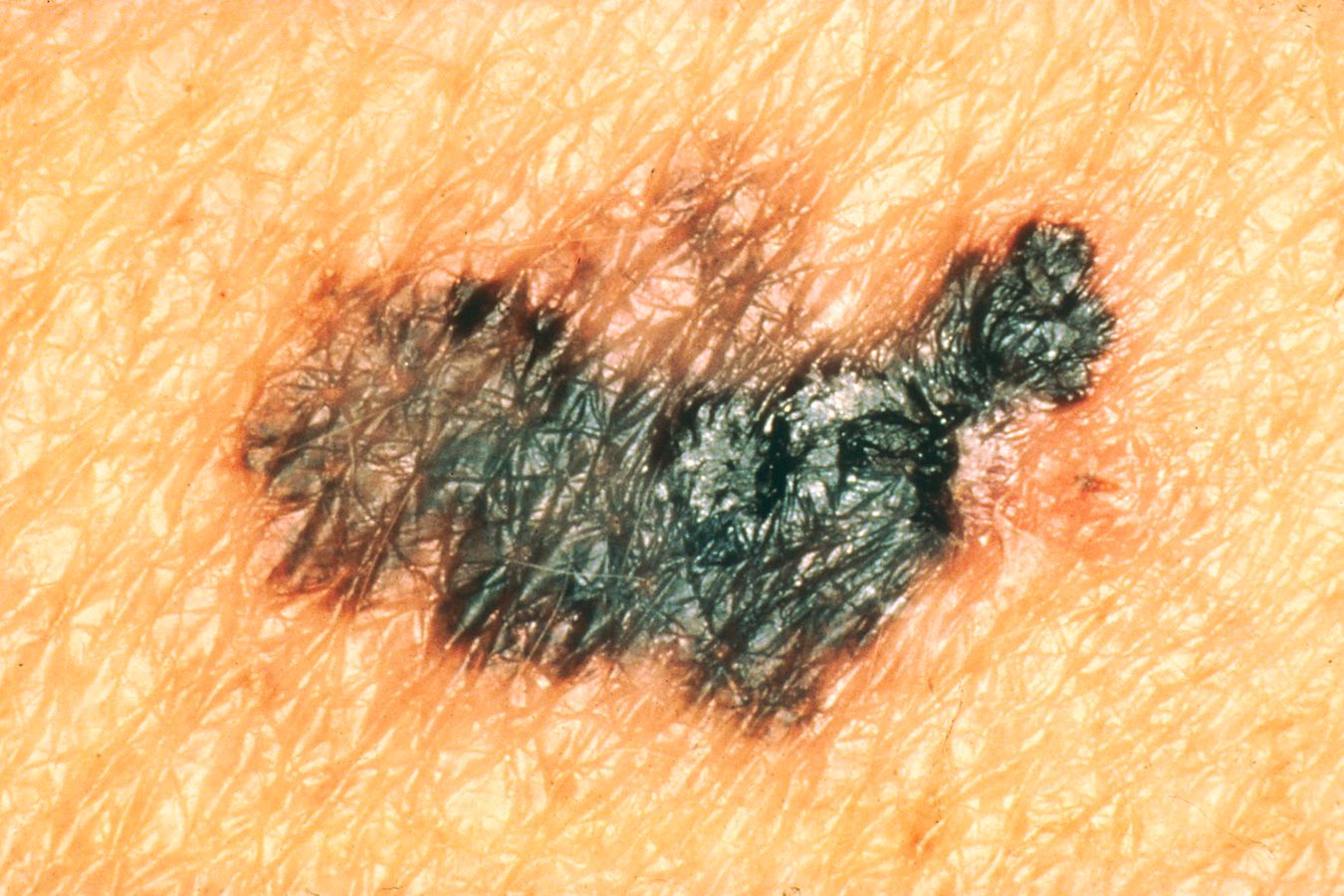
'Textbook' melanoma meeting all ABCDE criteria.
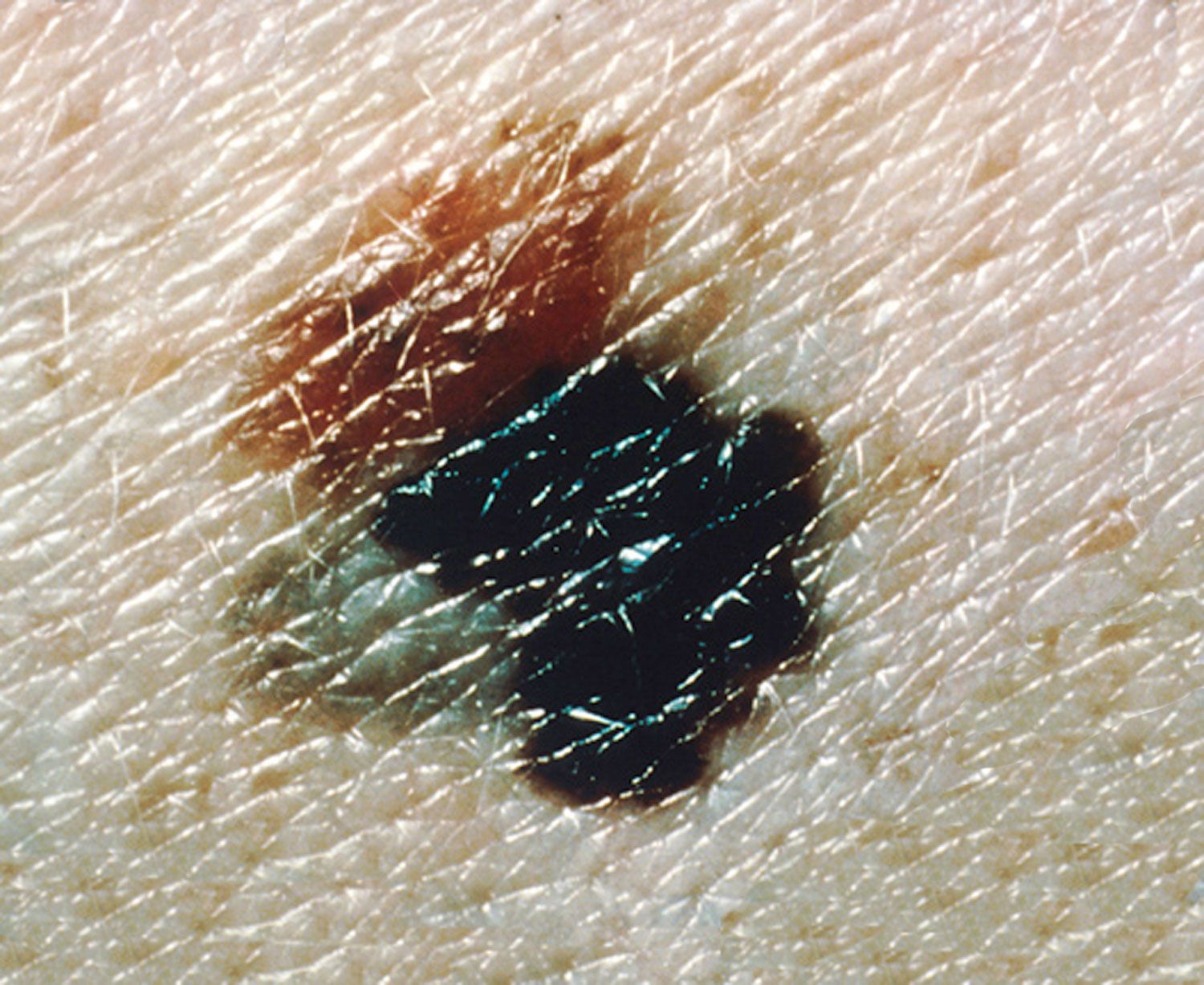
A melanoma with visibly uneven colors.
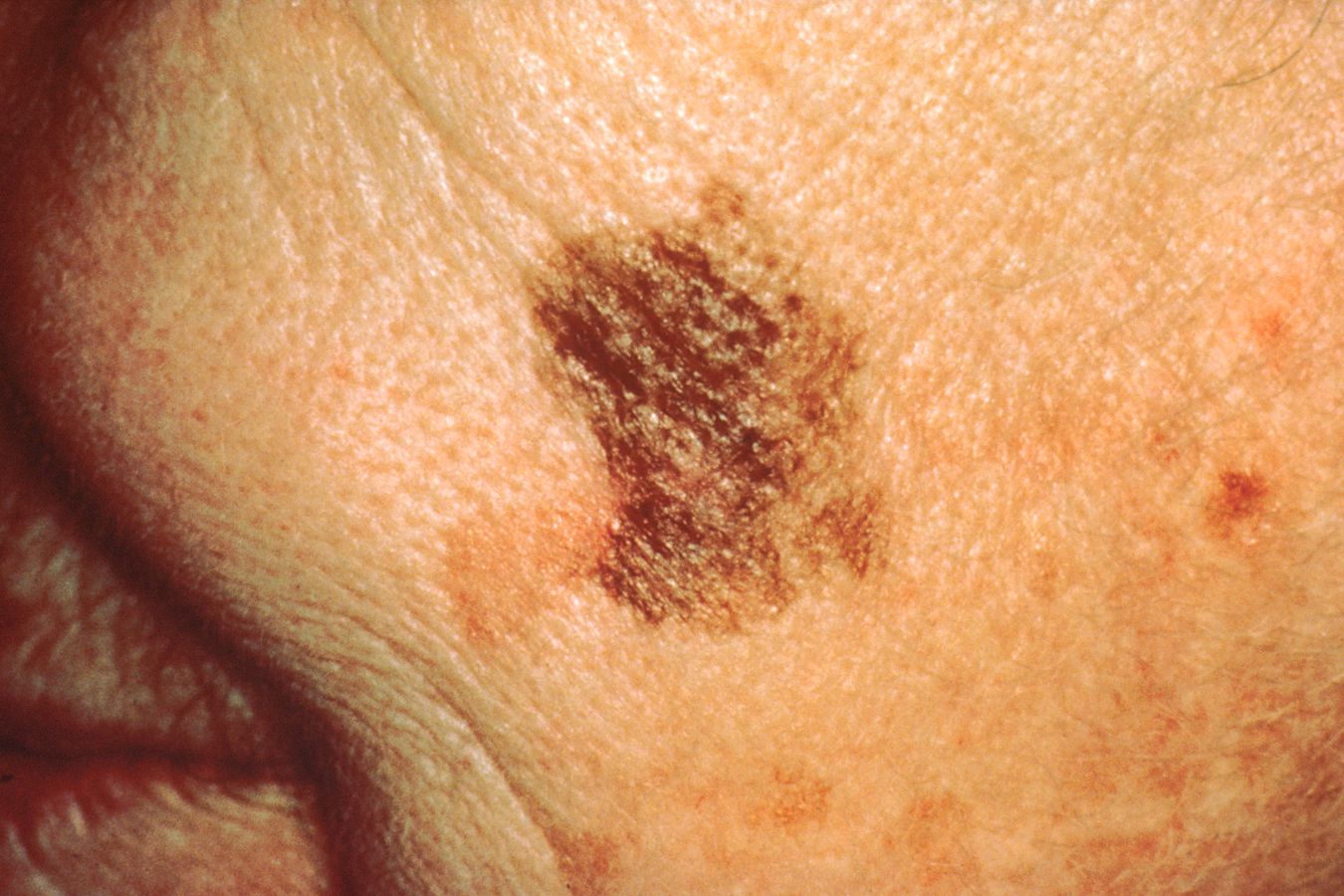
A melanoma on the face.
What Does Squamous Cell Carcinoma Look Like?
Squamous cell carcinoma (SCC) is a very common form of skin cancer. Although less dangerous than melanoma, SCC can spread if left untreated, leading to complications.
Key signs of SCC include:
- Rough or scaly patches, usually red or darker, which might crust or bleed.
- A firm bump on the skin, called a nodule. This can be the same color as your skin, or different.
- A raised growth or bump with a lower center area.
- An open sore, which may have oozing or crusted areas, that won’t heal or that heals and keeps coming back.
- A sore or wart-like growth on the lips or in the mouth.
Although less common, SCCs can also appear in areas that rarely see the sun, such as the genitals or the soles of the feet. If you have any persistent sores or abnormal growth, get your skin checked.
Below are example images of squamous cell carcinoma.
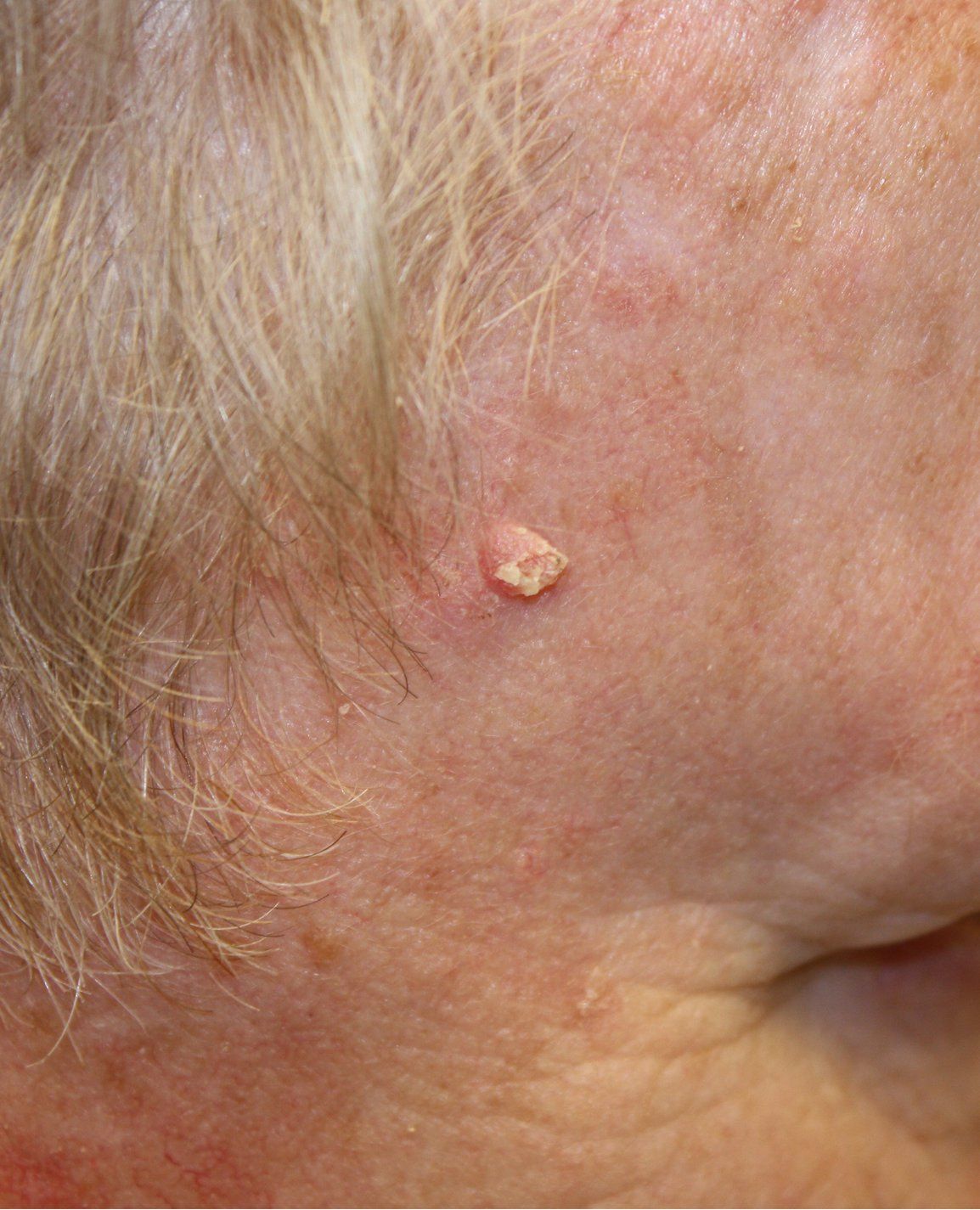
A wart-like SCC on the face.
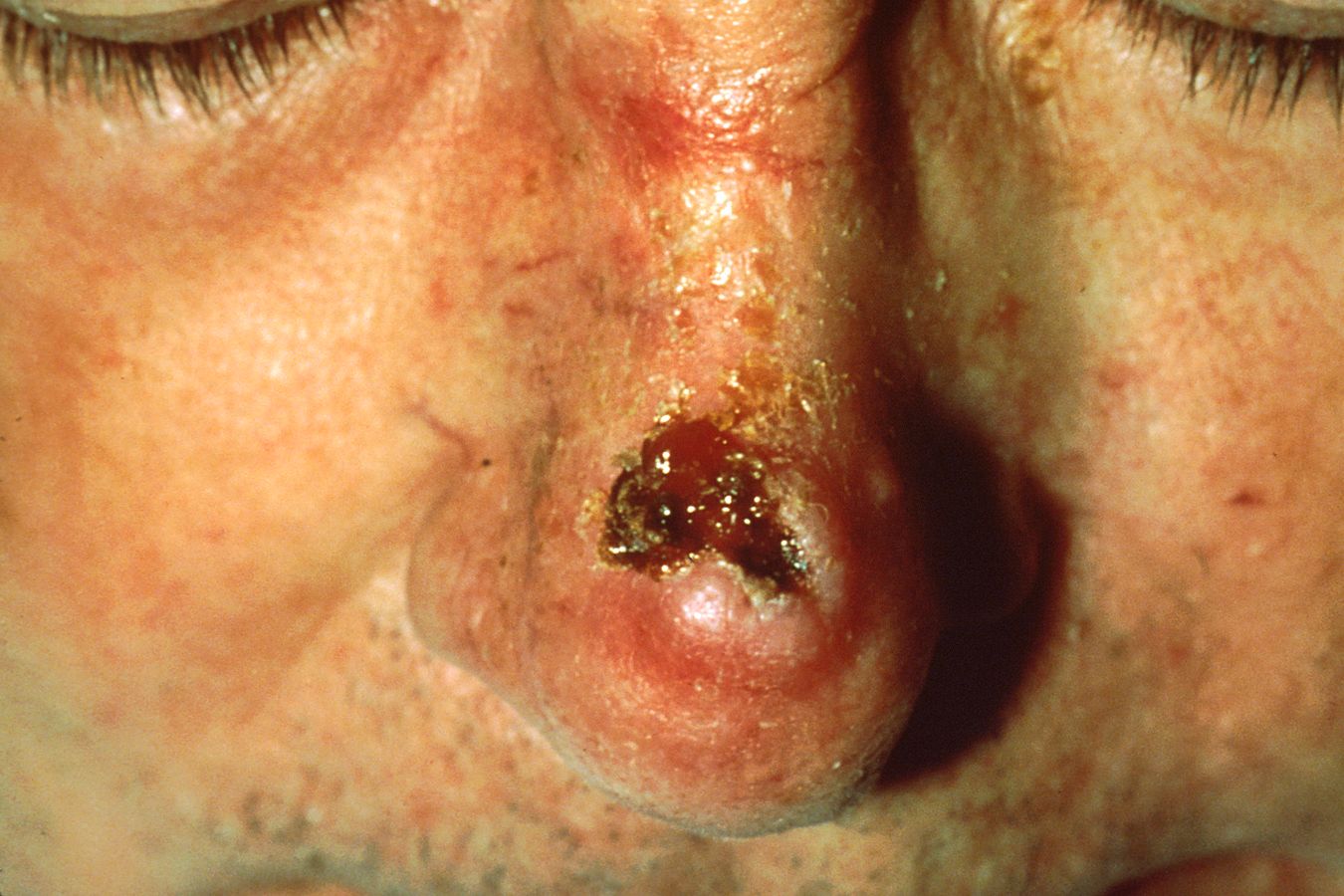
An SCC on the nose with a red, scaly appearance.
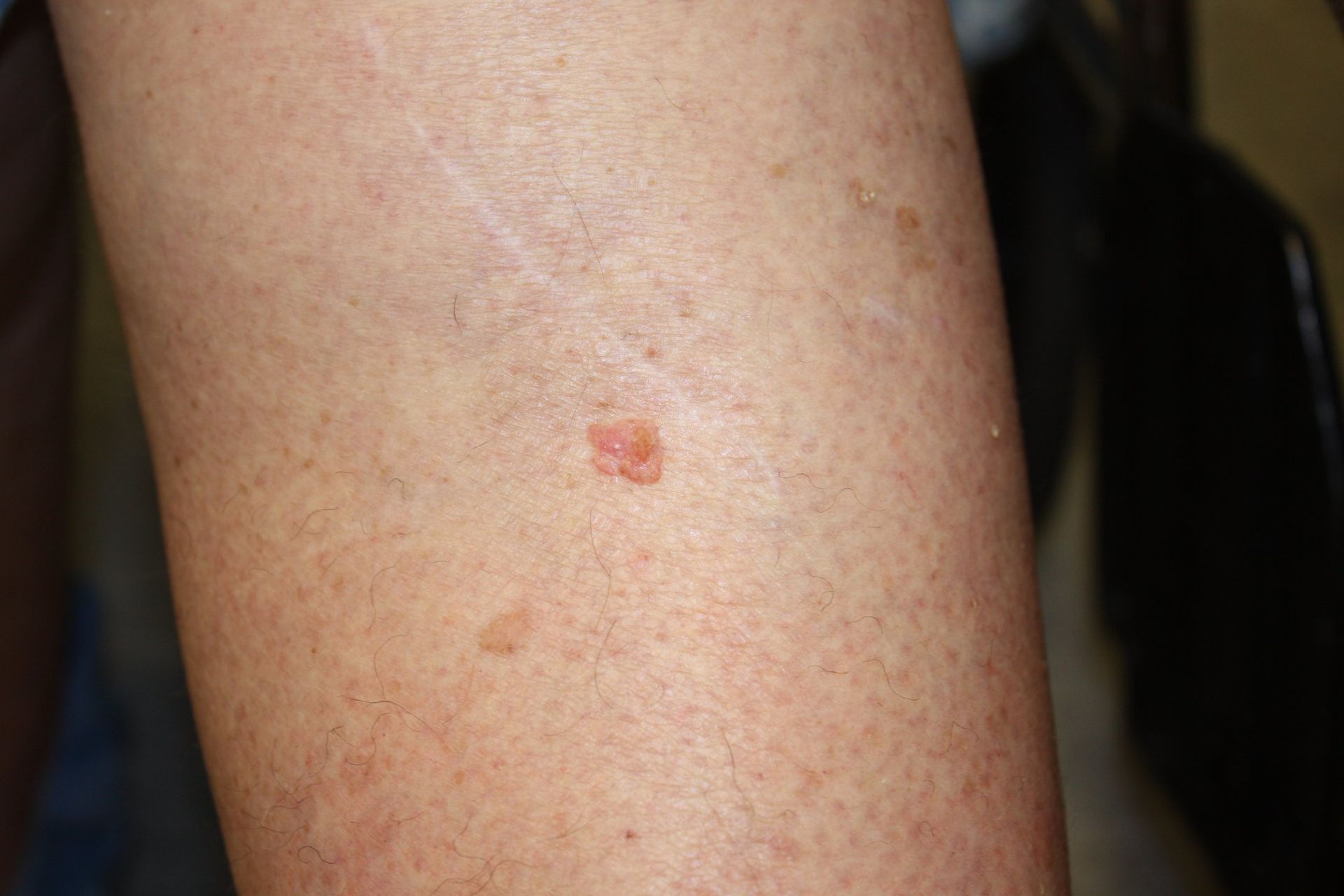
An SCC on the leg, appearing as a pink, raised lesion.
What Does Basal Cell Carcinoma Look Like?
Basal cell carcinoma (BCC) is the most common form of skin cancer, with millions of cases in the U.S. each year. BCC spreads slowly and is rarely fatal, but it’s still important to be aware of it and get your skin checked.
Possible signs of BCC include:
- Pearly or shiny bumps that can be skin-colored, pink or white.
- Red patches that may be scaly, itchy, or irritated.
- An open sore, which may have oozing or crusted areas, that won’t heal or that heals and keeps coming back.
- Scar-like areas that can be white, yellow, or pearly.
BCCs usually develop on areas of the skin exposed to the sun, such as the head, face, neck, and arms. However, they can appear on any part of the body. If you think you might have a suspicious spot, see a dermatologist for diagnosis.
Below are example images of basal cell carcinoma.
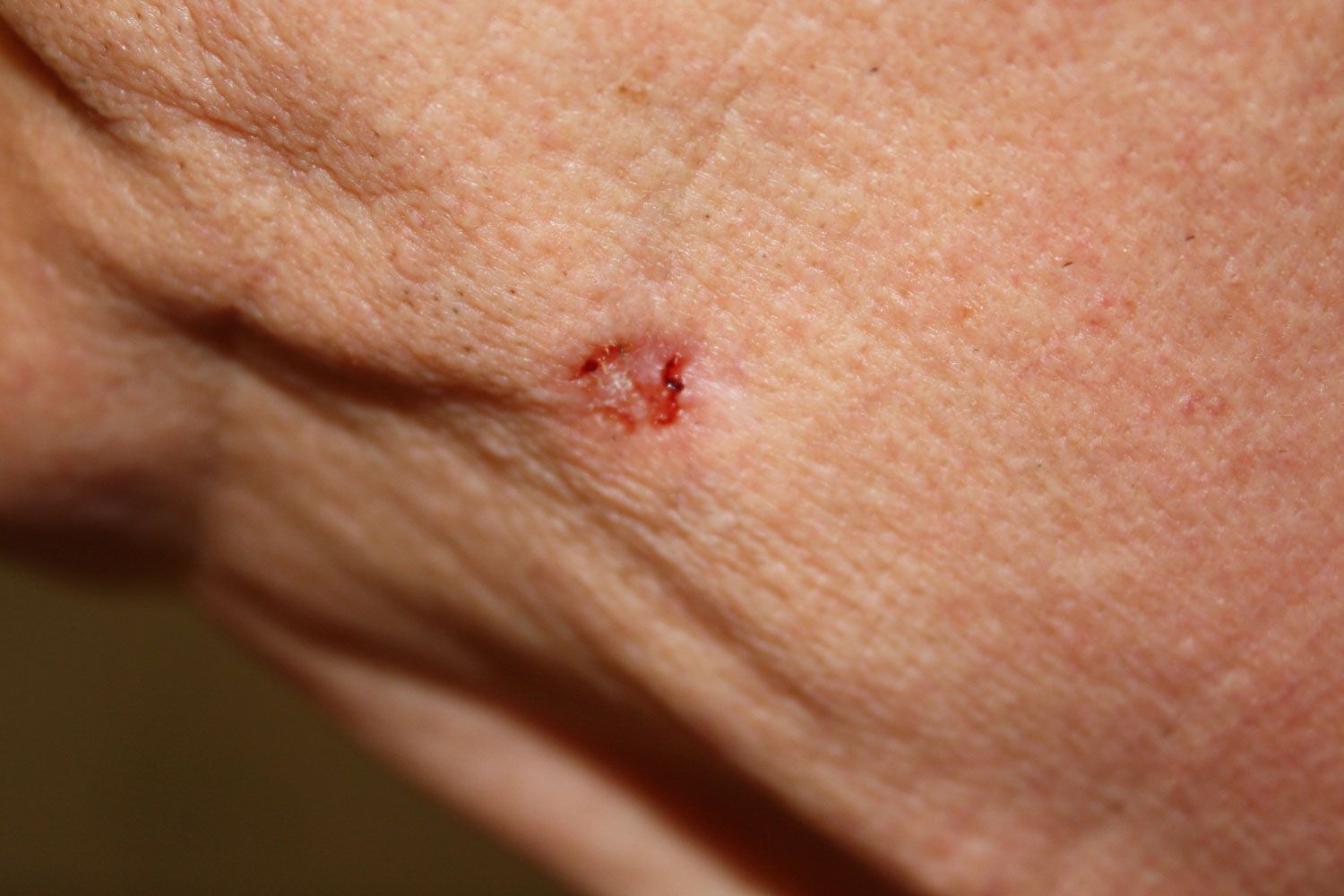
An ulcerated BCC on the face.
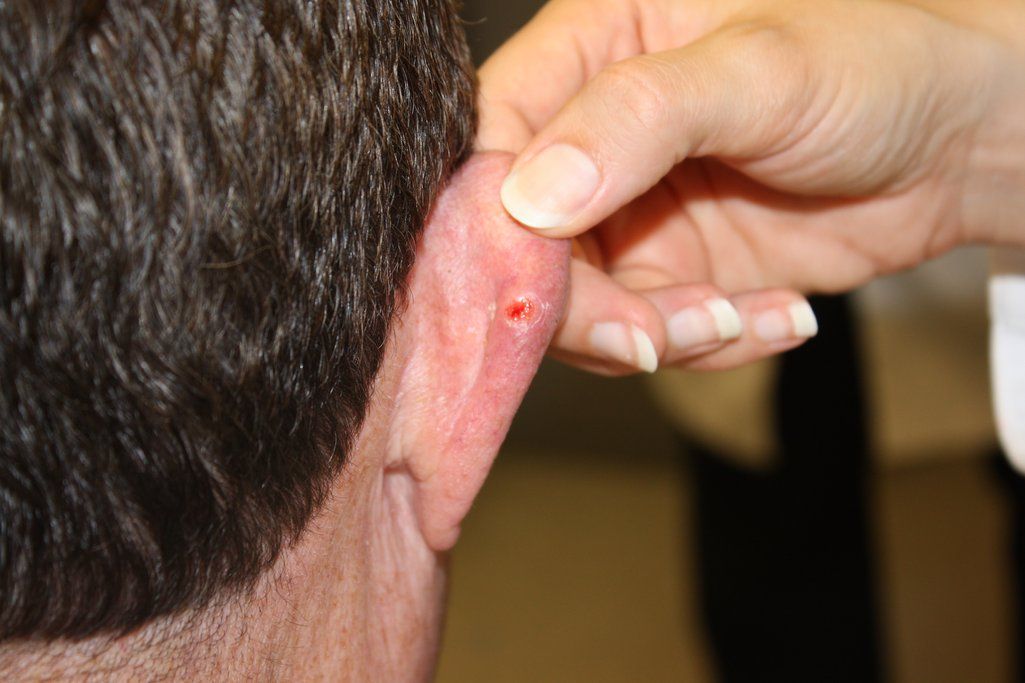
A BCC on the ear.
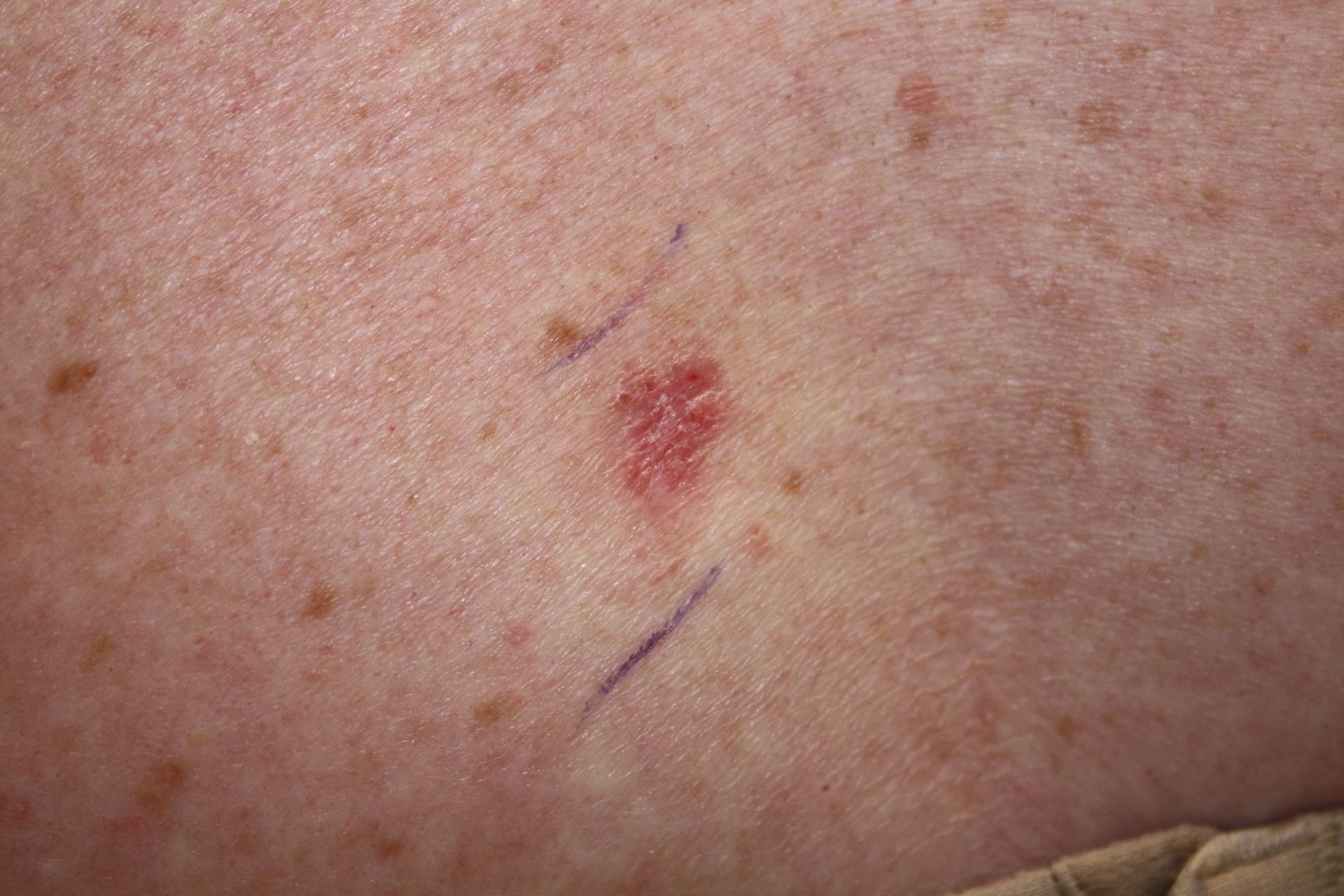
A superficial, reddish-brown colored BCC.
When to See a Doctor
Skin cancer doesn’t discriminate—it can appear on anyone, regardless of skin tone or color, and can even appear on parts of the body rarely exposed to the sun.
If you notice any of the following signs, seek medical attention:
- Any spot that’s new, unusual, or changing (this is the most important warning sign).
- Rapidly growing lesions.
- Persistent sores or bleeding spots.
- Moles that look different from other moles or spots on your skin.
Prevention saves lives. When detected early, skin cancer is relatively easy to manage and has high survival rates. It is recommended to do a skin self-exam once a month and get a professional skin cancer screening at least once a year. If you have any risk factors, like a family history of skin cancer, talk to a medical professional to see how often you should get skin checks.
On this page
References
- American Cancer Society. Basal and Squamous Cell Skin Cancer Symptoms | Skin Cancer Signs. www.cancer.org. 2024. Available from: https://www.cancer.org/cancer/types/basal-and-squamous-cell-skin-cancer/detection-diagnosis-staging/signs-and-symptoms.html
- American Cancer Society. Basal & Squamous Cell Skin Cancer Statistics. www.cancer.org. 2023. Available from: https://www.cancer.org/cancer/types/basal-and-squamous-cell-skin-cancer/about/key-statistics.html
- Mayo Clinic. Squamous Cell Carcinoma of the Skin - Symptoms and Causes. Mayo Clinic; 2023. Available from: https://www.mayoclinic.org/diseases-conditions/squamous-cell-carcinoma/symptoms-causes/syc-20352480
All images are in the public domain and can be freely reused. Images sourced from: National Cancer Institute Visuals Online