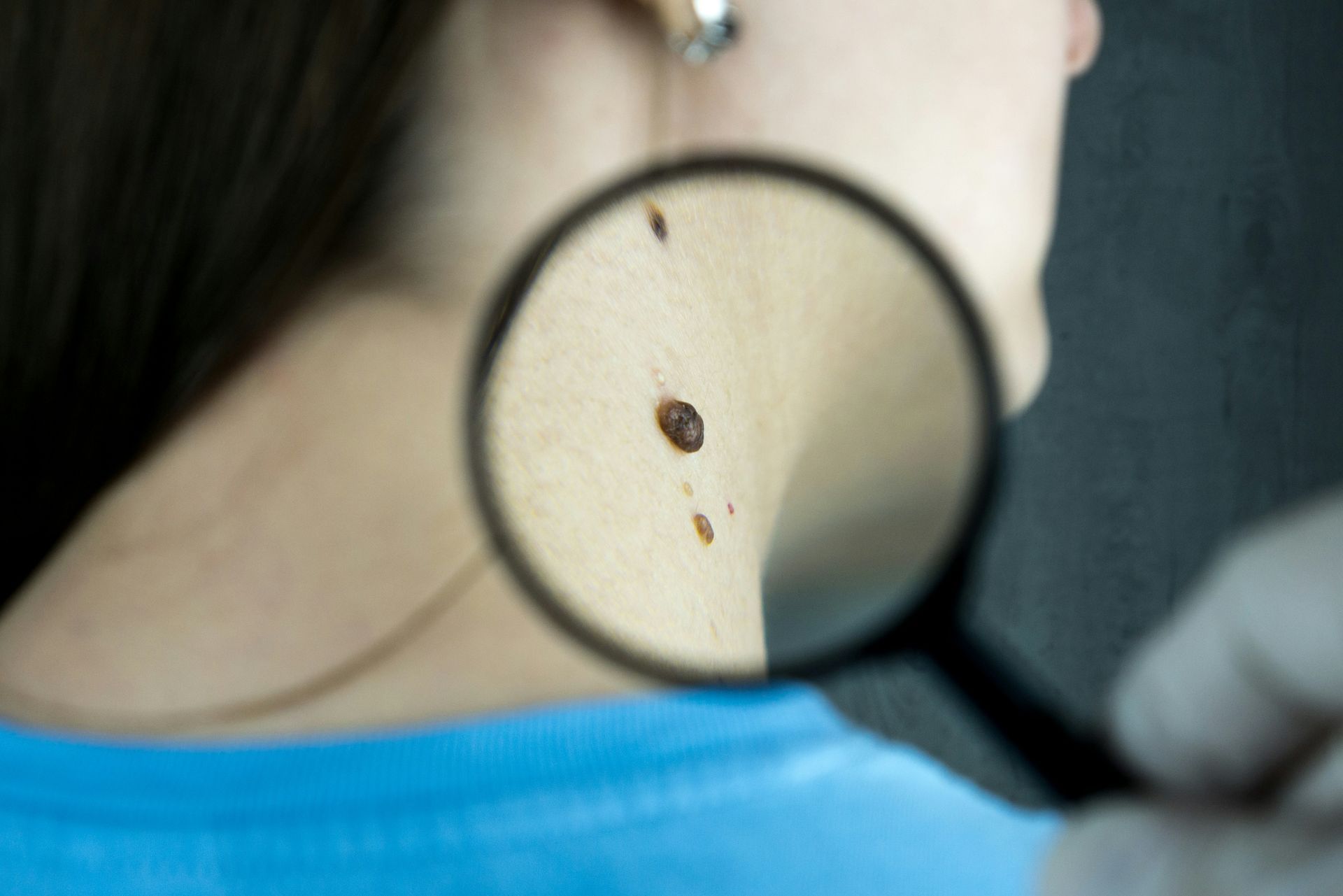
Skin Cancer Facts and Statistics
Skin cancer is the most common cancer in the United States and a major public health issue. While many cases are preventable, incidence rates continue to rise, and the disease causes thousands of deaths annually. Here are the facts you need to know.
How Common is Skin Cancer?
Skin cancer affects a very large portion of the U.S. population. Here are some general facts on skin cancer incidence and mortality:
- Approximately 1 in 5 Americans will develop skin cancer [2].
- An estimated 9,500 people in the U.S. are diagnosed with skin cancer every day [3].
- More people are diagnosed with skin cancer each year in the U.S. than all other cancers combined [3].
- More than 2 people die of skin cancer every hour [5].
- When detected early, the 5-year survival rate for melanoma (the deadliest skin cancer) is 99% [6].
Melanoma
Melanoma is the deadliest form of skin cancer, and its incidence has been rapidly rising.
- About 8,430 people are expected to die of melanoma in 2025 [7].
- Experiencing 5 or more sunburns, even in childhood, doubles your risk of developing melanoma [8].
- Having a lighter skin tone is a major risk factor for melanoma. In fact, the lifetime risk of developing melanoma is about 3% (1 in 33) among White people, compared to 0.5% (1 in 200) among Hispanics and 0.1% (1 in 1000) in Black people [7].
- Melanoma is one of the most common cancers diagnosed in younger adults, particularly women under age 40 [9].
- When detected early, the 5-year survival rate for melanoma (the deadliest skin cancer) is 99% [6].
Non-Melanoma Skin Cancers
Non-melanoma skin cancer (NMSC) is the most common type of skin cancer and primarily involves basal cell carcinoma (BCC) and squamous cell carcinoma (SCC).
- About 5.4 million cases of non-melanoma skin cancers are diagnosed each year [10].
- These cancers spread slowly and aren’t as dangerous as melanoma. But, they can still lead to death if left untreated. In the U.S., it’s estimated that between 2,000 and 8,000 people die annually from NMSCs [10].
- About 90% of NMSC cases are associated with ultraviolet (UV) radiation exposure from the sun [11].
- Survival rates for basal and squamous cell carcinoma skin cancers are estimated to be near 100% when detected early. However, it is important to note that the true statistics are unknown since cancer registries do not record NMSCs.
Preventing Skin Cancer: Easy Steps
Although skin cancer is common, taking basic steps to protect yourself can help prevent it or catch it before it spreads.
- Use sunscreen regularly. Applying a broad-spectrum sunscreen of SPF 30 or greater to exposed skin significantly prevents all types of skin cancer.
- Avoid excessive sun exposure. Try to stay in the shade whenever possible, and avoid the midday sun (between 10am and 4pm), when UV radiation is strongest.
- Wear protective clothing and accessories, such as long-sleeve shirts, wide-brimmed hats, and sunglasses, to protect from the sun’s rays.
- Avoid tanning beds. Indoor tanning exposes your skin to dangerous levels of concentrated UV radiation, which has been shown to cause skin cancer.
- Check your skin regularly and see a dermatologist near you. By checking for new or changing moles or spots and getting professional skin exams, you can detect and treat skin cancer before it spreads.
On this page
References on this page
1. Guy GP, Jr., Machlin SR, Ekwueme DU, Yabroff KR. Prevalence and costs of skin cancer treatment in the U.S., 2002-2006 and 2007-2011. Am J Prev Med. 2015;48(2):183-187.
2. Stern RS. Prevalence of a history of skin cancer in 2007: results of an incidence-based model. Archives of Dermatology. 2010 Mar 1;146(3). doi:10.1001/archdermatol.2010.4
3. Cancer Facts & Figures 2025. American Cancer Society. https://www.cancer.org/content/dam/cancer-org/research/cancer-facts-and-statistics/annual-cancer-facts-and-figures/2025/2025-cancer-facts-and-figures-acs.pdf. Published 2025. Accessed 09/16/2025, 2025.
4. Rogers HW, Weinstock MA, Feldman SR, Coldiron BM. Incidence estimate of nonmelanoma skin cancer (keratinocyte carcinomas) in the U.S. population, 2012. JAMA Dermatol. 2015;151(10):1081–1086. doi:10.1001/jamadermatol.2015.1187. PMID:25928283.
5. Skin Cancer Foundation. Skin Cancer Facts & Statistics. The Skin Cancer Foundation. The Skin Cancer Foundation; 2024. Available from: https://www.skincancer.org/skin-cancer-information/skin-cancer-facts/
6. American Cancer Society. Melanoma Survival Rates | Melanoma Survival Statistics. www.cancer.org. 2024. Available from: https://www.cancer.org/cancer/types/melanoma-skin-cancer/detection-diagnosis-staging/survival-rates-for-melanoma-skin-cancer-by-stage.html
7. American Cancer Society. Melanoma Skin Cancer Statistics. www.cancer.org. 2023. Available from: https://www.cancer.org/cancer/types/melanoma-skin-cancer/about/key-statistics.html
8. Weinstock MA, Colditz GA, Willett WC, Stampfer MJ, Bronstein BR, Mihm MC, et al. Nonfamilial cutaneous melanoma incidence in women associated with sun exposure before 20 years of age. Pediatrics. 1989 Aug 1;84(2):199–204. Available from: https://pubmed.ncbi.nlm.nih.gov/2748244/
9. Weir HK, Marrett LD, Cokkinides V, Barnholtz-Sloan J, Patel P, Tai E, et al. Melanoma in adolescents and young adults (ages 15-39 years): United States, 1999-2006. Journal of the American Academy of Dermatology. 2011 Nov;65(5):S38.e1–13. Available from: https://www.ncbi.nlm.nih.gov/pmc/articles/PMC3254089/
10. Basal & Squamous Cell Skin Cancer Statistics [Internet]. Cancer.org. 2023. Available from: https://www.cancer.org/cancer/types/basal-and-squamous-cell-skin-cancer/about/key-statistics.html?
11. Kim I, He YY. Ultraviolet radiation-induced non-melanoma skin cancer: Regulation of DNA damage repair and inflammation. Genes & Diseases. 2014 Sep 16 [cited 2020 Nov 23];1(2):188–98. Available from: https://www.ncbi.nlm.nih.gov/pmc/articles/PMC4307792/
12. Robinson JK, Bigby M. Prevention of Melanoma With Regular Sunscreen Use. JAMA. 2011 Jul 20;306(3).
Written by
Written and medically reviewed by the End Skin Cancer team.